
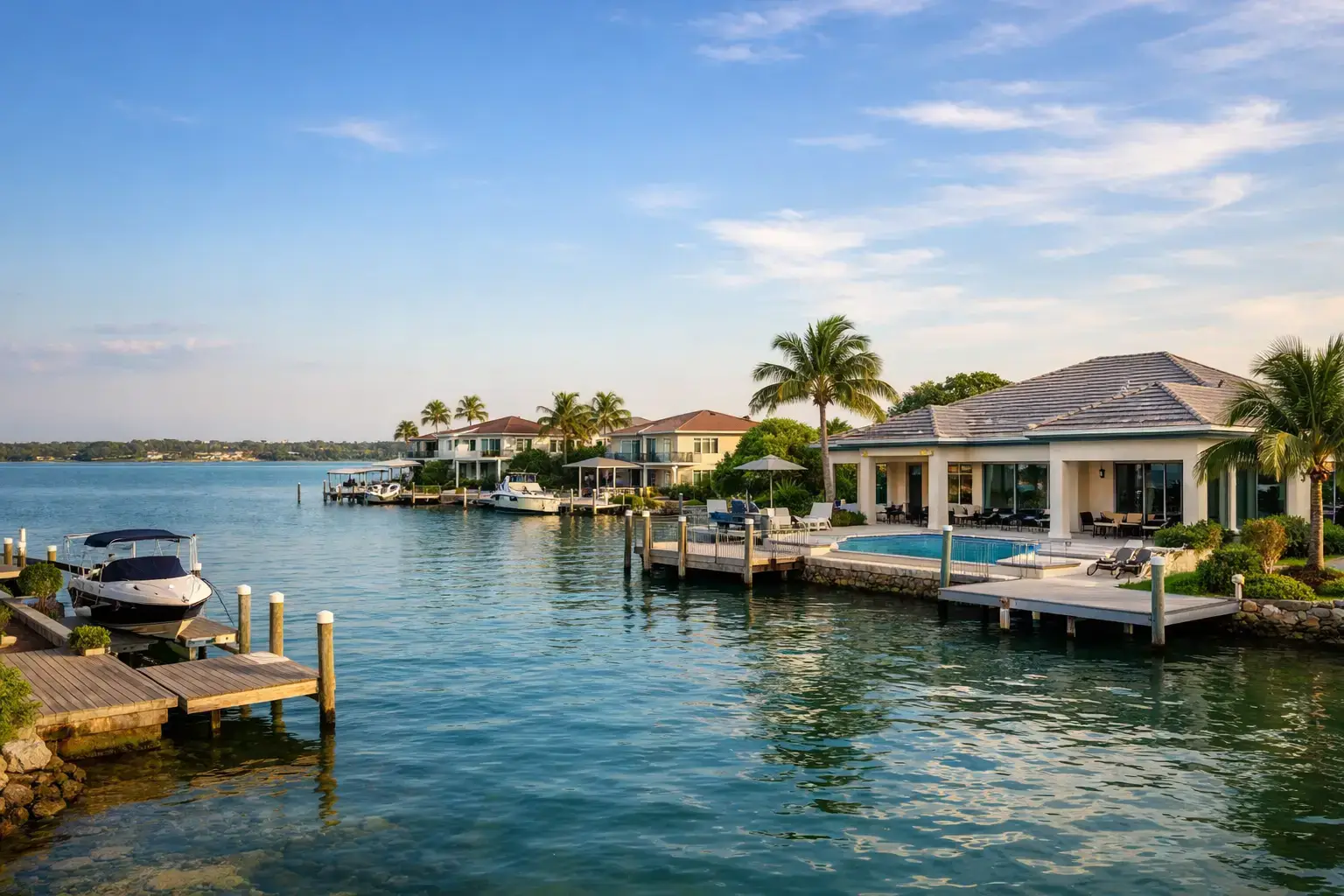
A sunset view over St. Joseph Sound can make a home tour feel like an easy decision. But waterfront homes ask buyers to look beyond the view. The water itself, the home’s elevation, insurance history, dock condition, and daily access all affect ownership costs and long-term value. In Dunedin, the right waterfront property can be an exceptional place to live and a meaningful investment. The key is understanding exactly what you are buying before you fall in love with the scenery.
What Counts as a Waterfront Home?
In addition, waterfront is a broad real estate term, and not every property with water nearby offers the same experience or value. A home directly on open water may have sweeping Gulf or sound views, while another may sit along a canal, marina basin, pond, or intracoastal waterway. Each setting creates different considerations for boating, privacy, maintenance, flood exposure, and resale appeal.
However, a property advertised as having water views may not have private water access. Conversely, a home on a canal may include a dock, boat lift, and a route to open water, but have more limited views. Buyers should ask direct questions early: Is the shoreline privately owned? Is there a seawall? Is the dock permitted and transferable? Are there bridge-clearance restrictions for a boat?
View, Access, and Boating Are Different Benefits
A view can add daily enjoyment and support resale value, especially when it is protected by the home’s position and surrounding land use. Access is more practical. It may mean the ability to launch a kayak from the backyard, walk to a community dock, or keep a boat behind the home.
However, boating access is its own category. A canal home with a fixed bridge may be ideal for paddleboards and smaller boats but unsuitable for a sailboat or larger vessel. Homes on deeper water may offer better access, though they can also face more exposure to wind, waves, and salt. There is no single best setting. It depends on how you plan to use the property.
Dunedin Waterfront Homes Offer Distinct Lifestyles
In addition, Dunedin gives buyers several ways to live close to the water. Properties near the Dunedin Causeway and St. Joseph Sound can appeal to residents who want proximity to boating, beaches, Honeymoon Island, and expansive west-facing skies. Other locations may offer quieter residential streets, marina access, or a short walk to downtown restaurants, shops, parks, and community events.
For some buyers, the ideal home is a primary residence where an evening walk by the water is part of everyday life. For others, it is a second home, a retirement move, or a property with strong appeal to future buyers. A waterfront address alone does not determine whether a home fits your plans. The surrounding neighborhood, traffic patterns, lot layout, outdoor living space, and proximity to the places you visit most all matter.
Before making an offer, spend time around the property at more than one hour of the day. Notice morning traffic, afternoon sun, boat activity, and the level of privacy from neighboring homes and public waterways. The conditions you see during a 20-minute showing are rarely the whole picture.
The Due Diligence That Protects a Waterfront Purchase
In addition, waterfront buyers should expect a more detailed investigation than they might need for an inland home. This is not a reason to avoid the property. It is how you make a confident decision and avoid surprises after closing.
Elevation, Flood Zones, and Insurance
However, Flood zones and elevation certificates deserve early attention. A home’s flood designation can affect required flood insurance, but the designation alone does not tell the full story. Elevation relative to the base flood elevation, construction type, improvements made since the home was built, and current insurance information can all influence cost and risk.
Ask for available insurance documentation, prior claims information when disclosed, and permits for major improvements. Buyers should also obtain insurance quotes during the inspection period rather than waiting until the final days before closing. Wind coverage, deductibles, flood insurance, and carrier requirements can vary substantially from one property to another.
However, a newer elevated home may offer a very different insurance profile than an older waterfront bungalow. That does not automatically make one the better choice. Older homes can have character, mature landscaping, and desirable locations, but they may require a more careful review of systems, upgrades, and ongoing maintenance.
Seawalls, Docks, and Boat Lifts
In addition, the shoreline infrastructure deserves the same attention as the roof or HVAC system. A seawall has a functional lifespan, and repair or replacement can be a major expense. Lookfor signs of leaning, cracking, soil loss, loose cap sections, or shifting near the water’s edge. A qualified professional can provide a more reliable assessment than a visual walk-around.
Docks and boat lifts should be reviewed for condition, electrical safety, permits, and capacity. It is helpful to know who is responsible for maintenance if the dock is shared or part of a homeowners association. If boating is central to your decision, verify water depth, bridge clearance, route to open water, and any local restrictions based on your actual boat, not a general assumption.
Salt Air Changes the Maintenance Plan
However, florida’s coastal environment is beautiful, but salt air is hard on exterior materials. Metal fixtures, windows, garage doors, HVAC components, outdoor kitchens, pool equipment, and fasteners may need more frequent cleaning, inspection, or replacement than they would farther inland.
Also, a thorough home inspection should be paired with a realistic maintenance budget. Buyers who plan for routine coastal care are often happier owners because they are prepared to preserve the home rather than reacting to every repair as an unexpected cost.
How to Evaluate Value Beyond the Listing Price
Two waterfront homes with similar square footage can have very different values. One may have protected open-water views, a newer seawall, a usable dock, and strong elevation. Another may have partial views, deferred maintenance, limited access, or an outdoor area that does not take advantage of its setting.
Comparable sales are essential, but they need to be truly comparable. A knowledgeable local agent looks at the type of water, view corridor, lot orientation, condition, dock and seawall features, and location within the neighborhood. A home on a quiet protected basin should not be valued exactly like one exposed to open water simply because both are labeled waterfront.
Buyers should also consider the cost of making the home fit their lifestyle. If the kitchen, windows, pool area, dock, or seawall needs work, those expenses should be part of the purchase decision. The lowest-priced waterfront property is not always the best value, particularly if substantial improvements are needed soon after closing.
Making a Smart Offer on a Waterfront Property
A strong offer balances competitiveness with protection. In a desirable location, sellers may receive interest quickly, especially when a property offers a rare combination of water access, views, updated condition, and walkability. Still, inspection and financing contingencies serve an important purpose when the property has waterfront-specific components to evaluate.
Your offer strategy should reflect the home’s condition, recent comparable sales, days on market, and the seller’s priorities. It may also include a clear timeline for inspections and insurance review so there is enough time to obtain meaningful answers. Curt Bush and the Bush Team Homes approach is centered on helping buyers understand these details before they commit, not simply getting a contract signed quickly.
A waterfront purchase should feel exciting, but it should also make sense on paper. When the numbers, condition, location, and lifestyle line up, you can move forward knowing the property supports the life you want to build there.
The best next step is to tour homes with your real priorities in mind: how you will use the water, what level of maintenance feels comfortable, and which location will still feel right long after the first sunset.